The InterPlanetary File System (IPFS) is a peer-to-peer (P2P), decentralized file storage and sharing system designed to make the web faster, safer, and more open. It was created as a response to the centralized nature of the traditional web, which relies on servers controlled by a few large entities.
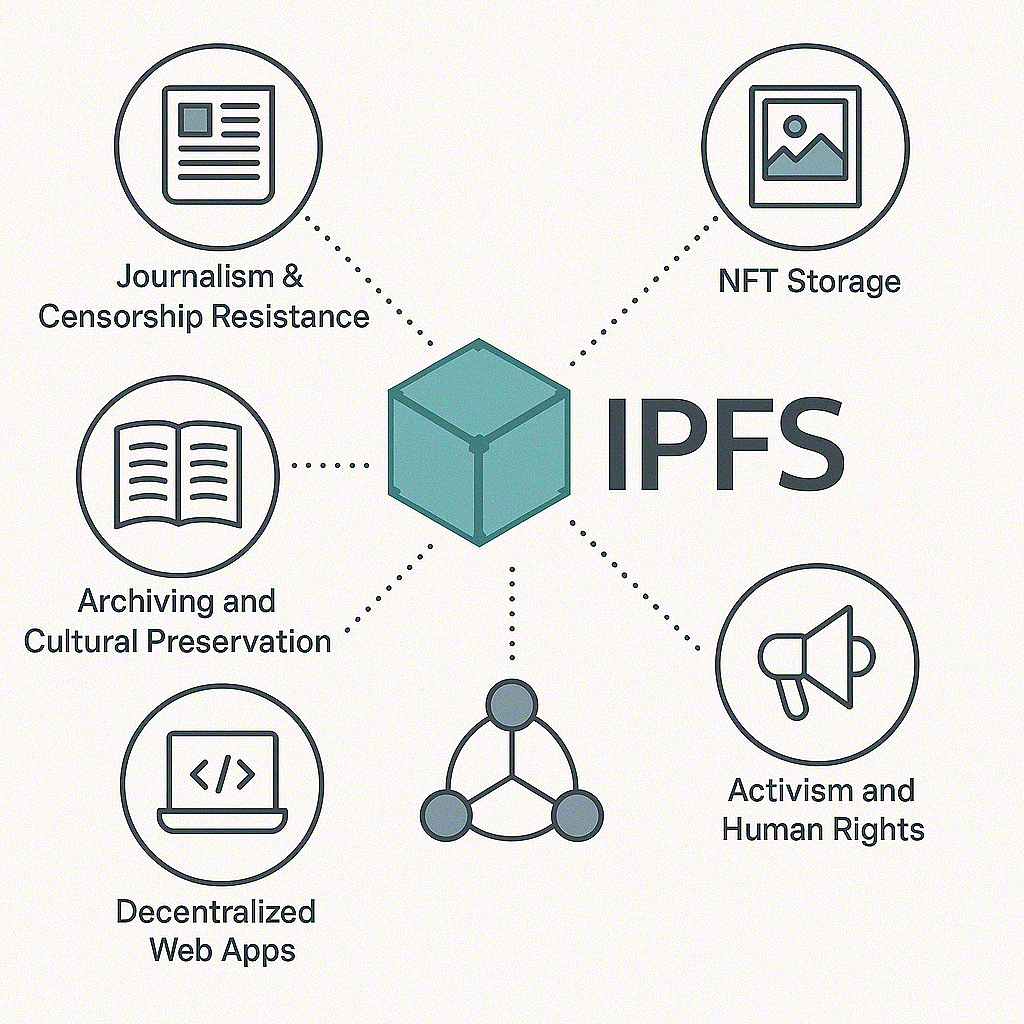
Objectives of IPFS
- Decentralization: Remove reliance on central servers and reduce the power of big tech gatekeepers.
- Resilience: Enable a web that remains online even if parts of it are attacked or disconnected.
- Efficiency: Avoid redundant data transfers and optimize content delivery.
- Permanence: Make digital information permanent and verifiable, useful for archiving and preserving knowledge.
- Censorship resistance: Create infrastructure that’s hard to censor or take down.
How IPFS Works
- Content Addressing:
- Instead of URLs that point to where content is (like https://example.com/file), IPFS uses hashes that point to what the content is.
- Each file is given a unique cryptographic hash (a content identifier or CID). If the content changes, so does the hash.
- Distributed File Storage:
- Files are split into small chunks. Each chunk is stored on different nodes (computers) in the network.
- When you request a file, IPFS searches the network for the nodes that have the required chunks.
- Peer-to-Peer Discovery:
- Nodes talk to each other directly, forming a distributed network.
- A Distributed Hash Table (DHT) helps nodes find each other and locate content.
- Versioning & Pinning:
- IPFS supports version control, similar to Git.
- Users can “pin” content to keep it stored persistently on their nodes.
People and Organizations Behind IPFS
-
Creator: Juan Benet, a computer scientist and entrepreneur, founded IPFS in 2015.
-
Primary Organization: Protocol Labs, the research and development lab behind IPFS. They also developed:
-
Filecoin: A cryptocurrency-based storage marketplace built on top of IPFS.
-
Libp2p: A modular P2P networking stack used by IPFS and other projects.
-
-
Ecosystem Partners:
-
Mozilla, Netflix, OpenBazaar (defunct), and many academic institutions have experimented with or adopted IPFS tech.
-
Projects like the Internet Archive and The Web3 Foundation support similar decentralized web principles.
-
Political and Philosophical Directions
IPFS is aligned with the broader Web3 and decentralization movement, which values:
- Autonomy and self-governance over centralized corporate control.
- Open-source collaboration over proprietary lock-in.
- Censorship resistance in support of free speech and open access.
- Digital sovereignty—users own their data and identity.
It often attracts supporters of:
- Techno-libertarianism (emphasis on freedom from centralized control),
- Digital human rights advocacy, and
- Decentralized governance initiatives.
Use Cases
Journalism & Censorship Resistance
Use Case: Preserving truth in hostile environments
- Example: News publications in authoritarian countries
- Independent journalists use IPFS to publish articles that can’t be taken down, even if their websites are blocked or seized.
- By sharing the IPFS content hash, anyone can access the story from anywhere — no domain required.
- Tools used: IPFS + ENS (Ethereum Name Service) or IPNS (InterPlanetary Naming System)
NFT Storage
Use Case: Making NFTs actually decentralized
-
Problem: Most NFTs just link to media hosted on traditional servers. If that server goes down, the NFT “disappears.”
-
Solution: Store the NFT’s image or metadata on IPFS, so the NFT points to a permanent, decentralized file.
-
Popular platforms:
-
Pinata, NFT.Storage (by Protocol Labs), and Fleek help NFT projects pin their files on IPFS.
-
-
Example: Cryptographic art platforms like Zora, Foundation, and OpenSea use IPFS under the hood.
Archiving and Cultural Preservation
Use Case: Keeping important digital records alive
-
Internet Archive has explored using IPFS to back up huge collections.
-
Open-access science journals, community zines, and even Wikipedia snapshots have been preserved via IPFS.
-
This prevents the “link rot” that often breaks references and digital footnotes over time.
Decentralized Web Apps (dApps)
Use Case: Hosting apps that don’t rely on centralized cloud services
-
dApps use IPFS to host their front-end code, making them immutable and censorship-resistant.
-
Often combined with:
-
Ethereum or Solana for smart contracts
-
Filecoin or Arweave for storage incentives
-
Fleek and web3.storage for streamlined deployment
-
-
Examples:
-
Voting platforms (e.g. Snapshot)
-
DAO dashboards
-
Anonymous publishing tools
-
Activism and Human Rights
Use Case: Safe distribution of sensitive info
-
Activist groups and whistleblowers use IPFS to share documents and videos that might otherwise be taken down.
-
Example: During the Hong Kong protests and similar movements, IPFS was used to archive content that was being rapidly deleted from social platforms.